
When a Registered Address Looks Outdated
A map result can raise a legitimate question without establishing noncompliance. First open the corresponding card or state profile and note the exact address, displayed status, verification information, profile URL, and date of the search. Check whether the parish map is filtered to the current viewport and whether more than one card is associated with the location. A point count is an interface total, not proof of a unique resident count, and a map marker can be an imprecise representation of the published address.
Compare the local entry with the Louisiana registry because the state profile may carry a fuller status or update history. If the person may have moved across state lines, check NSOPW and then return to the originating jurisdiction’s profile for authoritative detail. Do not visit the address, question neighbors, confront the listed person, or publish an accusation. Contact the Richland Parish Sheriff at 318-728-2071 or use an official registry reporting function with the captured facts. Call emergency services only when there is an immediate emergency.
The sheriff or BCII determines whether a reported difference reflects a recent move, delayed public display, correction in progress, shared address, mapping issue, or violation. Registry tiers and renewal intervals help explain when in-person verification is required, but they do not let a public user declare a person out of compliance. Careful reporting preserves the safety purpose of the registry while avoiding harassment and unsupported conclusions.
Richland Parish Sex Offender Checks
Louisiana State Police BCII maintains the central registry under R.S. 15:542.1, while the Richland Parish Sheriff handles local registration and exposes an unusually direct map/list. The parish view is best for neighborhood geography and visible local cards; the state vendor portal provides fuller name and geographic searching and may provide a more detailed profile. Search both when details matter.
A registry listing reflects a statutory registration duty. It is not a current arrest roster, a complete court docket, or a real-time dangerousness score. For the underlying prosecution and disposition, use the appropriate clerk file. For current custody, use official Richland Parish arrest and inmate channels.
Using Richland Sheriff’s Registry Map
The official Richland Parish Sheriff sex-offender interface displayed “Currently displaying 86 points” during inspection. It offered a “Type to Search” filter, map navigation, “Filter list by current map view,” and cards showing tier and full registered address.
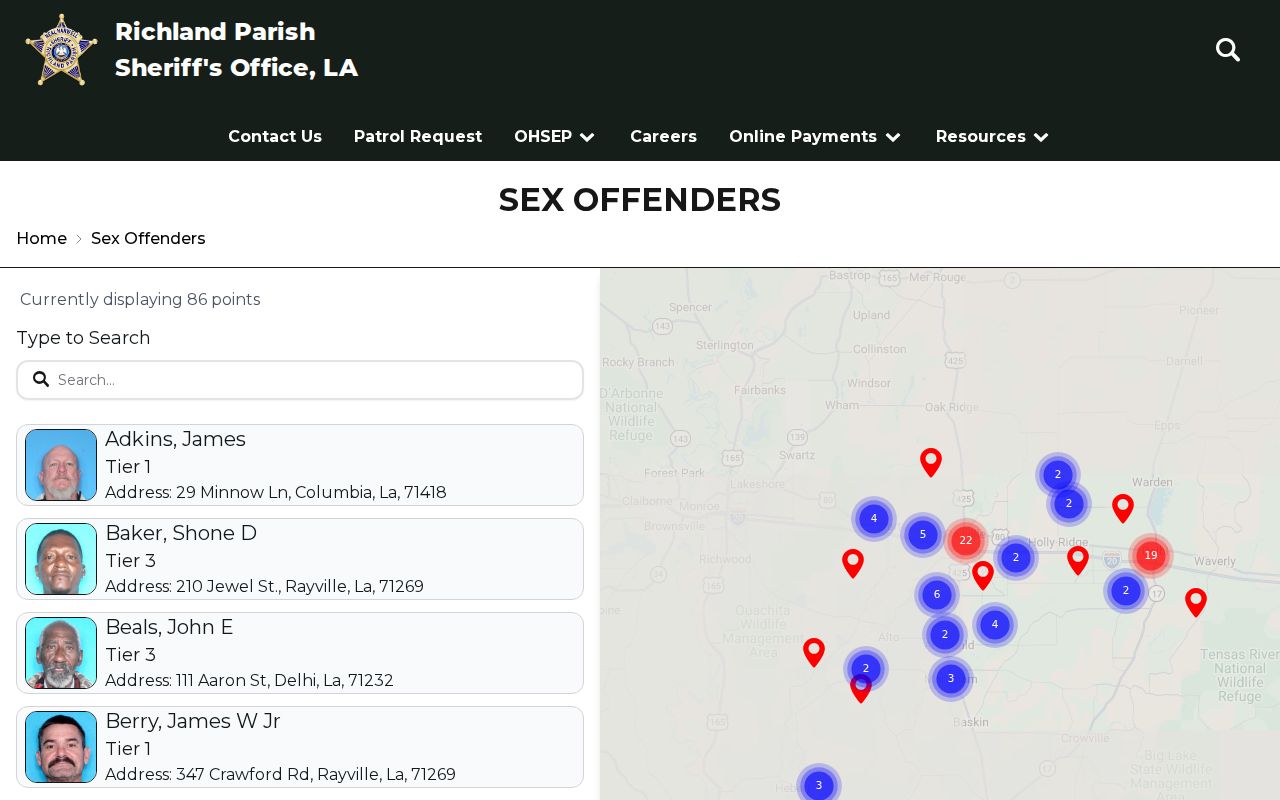
The displayed count is a dated interface observation, not a permanent population statistic. One mapped point should not automatically be treated as one unique person: shared addresses, multiple map entries, filtering, and interface behavior must be checked against the actual result cards.
| Control | Type | Required | Use |
|---|---|---|---|
| Type to Search | Text filter | No | Filters the displayed list; matching rules were not published. |
| Interactive map | Map | No | Pan and zoom around registered locations. |
| Filter list by current map view | Control | No | Limits cards to the visible viewport. |
| Result card | Display | , | Shows name, tier or not-yet-assigned label, and address. |
Louisiana State Sex Offender and Child Predator Registry Searches
The official Louisiana registry gateway links to the state vendor interface maintained through BCII.
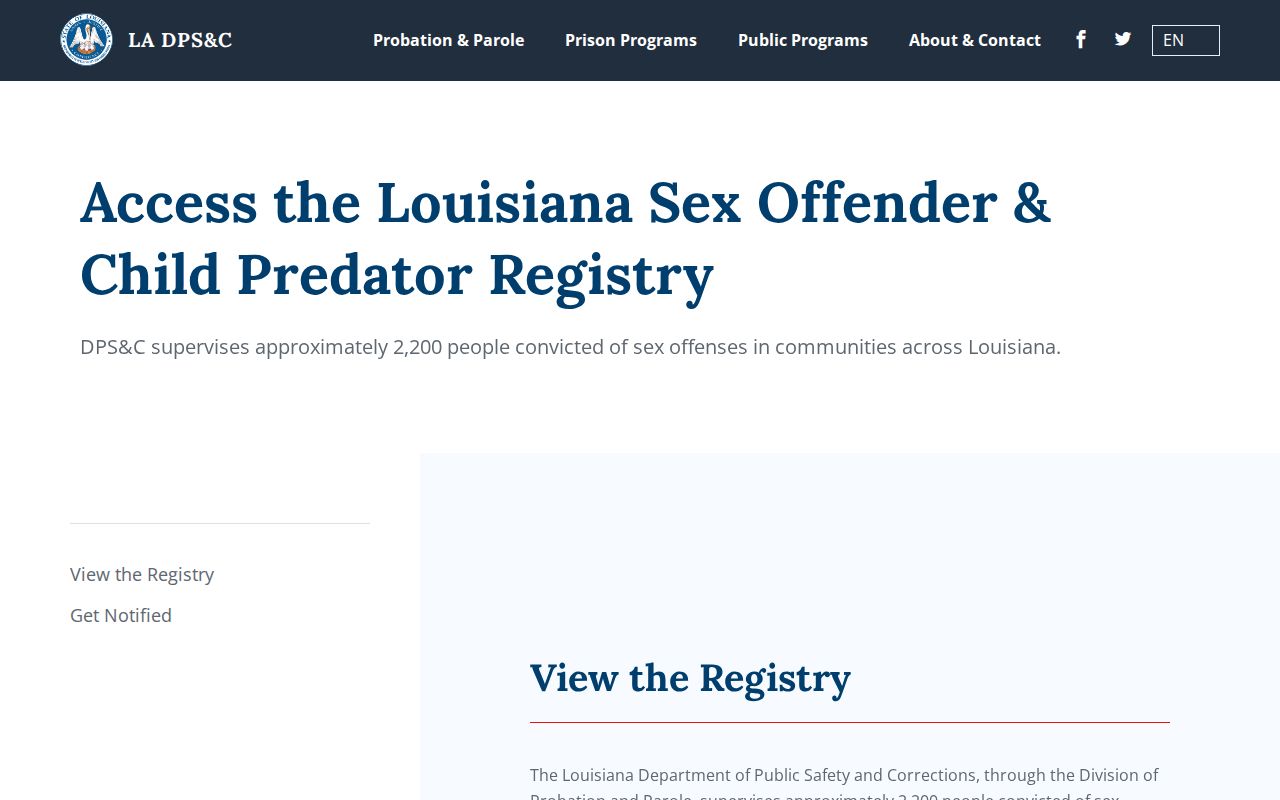
The gateway confirms the proper statewide route. Live vendor controls can change, and radius choices were not reliably exposed to the crawler, so verify the current interface rather than assuming a field exists.
- Open the official Louisiana gateway and follow its registry-search link and conditions of use.
- Choose the available name or geographic search; enter only the identifiers the live form requests.
- Review the result list and compare name, photograph, physical details, address, and status before deciding that a profile matches.
- Open the full profile, note verification and offense information, and compare a Richland location with the sheriff map if needed.
| Field | Type | Required | Notes |
|---|---|---|---|
| Name search | Text | Verify live | State interface commonly separates first and last name. |
| Geographic/address search | Text/select | No | Use for place-based checking where offered. |
| City or ZIP | Text/select | No | Narrows geography when present. |
| Parish | Select | No | Choose Richland if the live portal offers parish filtering. |
| Radius | Map/select | Verify live | No reliable radius values were captured in research. |
State Registry, Parish Map, and NSOPW Compared
The parish map emphasizes local address points and compact cards. The Louisiana registry is the fuller state layer for people required to register under Louisiana law. The Dru Sjodin National Sex Offender Public Website federates participating jurisdictions for cross-state searches.
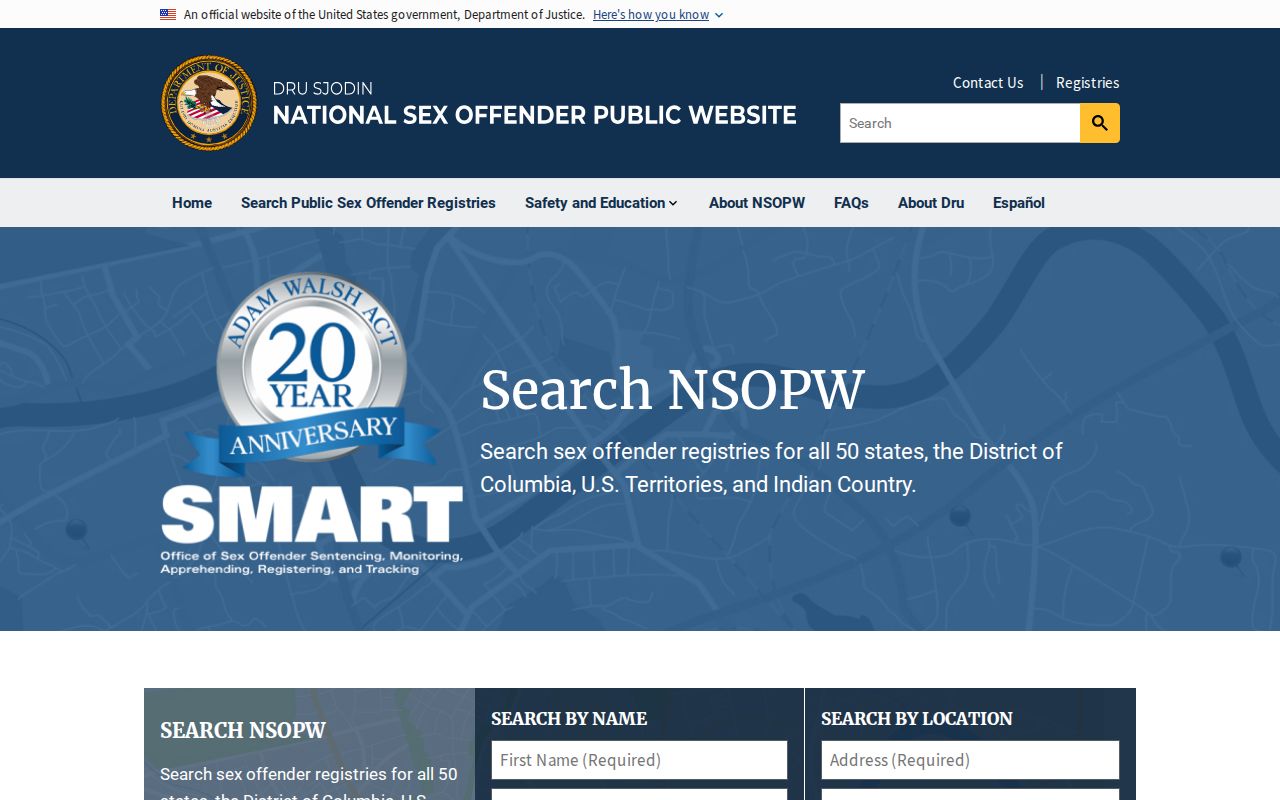
NSOPW is especially useful when a name or address history reaches beyond Louisiana, but it does not replace the originating jurisdiction’s profile. Return to the Louisiana or parish source to interpret local tier, verification, and address details.
Registry Profiles: What They Show
The public Richland list visibly provides name, tier, 1, 2, 3, or not yet assigned, and street, city, and ZIP, together with a map point. A fuller Louisiana profile may show the following fields, depending on what the law permits and the record contains.
| Name & Aliases | Registered identity and alternate names used to distinguish a match. |
|---|---|
| Photo & Physical Description | Photograph, descriptors, and potentially scars, marks, or tattoos. |
| Registered Address | Published residence and map location; verify the update/status date. |
| Offense & Statute | Qualifying offense, jurisdiction, dates, and conviction or release information where published. |
| Level / Tier | Louisiana tier assignment or a not-yet-assigned interface label. |
| Registration Status | Compliance or absconded status and verification information where shown. |
Vehicle, employer, and school information may also appear where legally published. The research did not open an individual profile because the accessible list exposed private identities; only system fields were inventoried.
What “Not Yet Assigned” Means
The parish list can display “not yet assigned” where a tier label is not currently shown. That interface label should not be read as proof that the person has no registration duty, presents a particular level of risk, or is exempt from verification. Open the state profile and contact the responsible official office if clarification is necessary.
Likewise, a tier is a statutory classification tied to offense and registration rules, not a prediction of present conduct. Use the registry for factual location and status information, and avoid conclusions the source does not support.
Registration Levels and Duties in Louisiana
Louisiana renewal frequency depends on statutory category. R.S. 15:542.1.1 supplies a baseline and more frequent categories. Duration and assignment are offense-specific and can be affected by the governing judgment and law; they should be verified from the actual profile and statute rather than guessed from a card.
| Level / category | Duration | Verification frequency |
|---|---|---|
| Tier 1 | Offense-specific; verify profile and law | Baseline annual renewal unless a more frequent rule applies. |
| Tier 2 | Offense-specific; verify profile and law | Certain victim-minor categories renew every six months. |
| Tier 3 | Offense-specific; verify profile and law | Certain aggravated or recidivist categories renew every three months. |
The official Louisiana renewal statute is the primary source for the schedule.
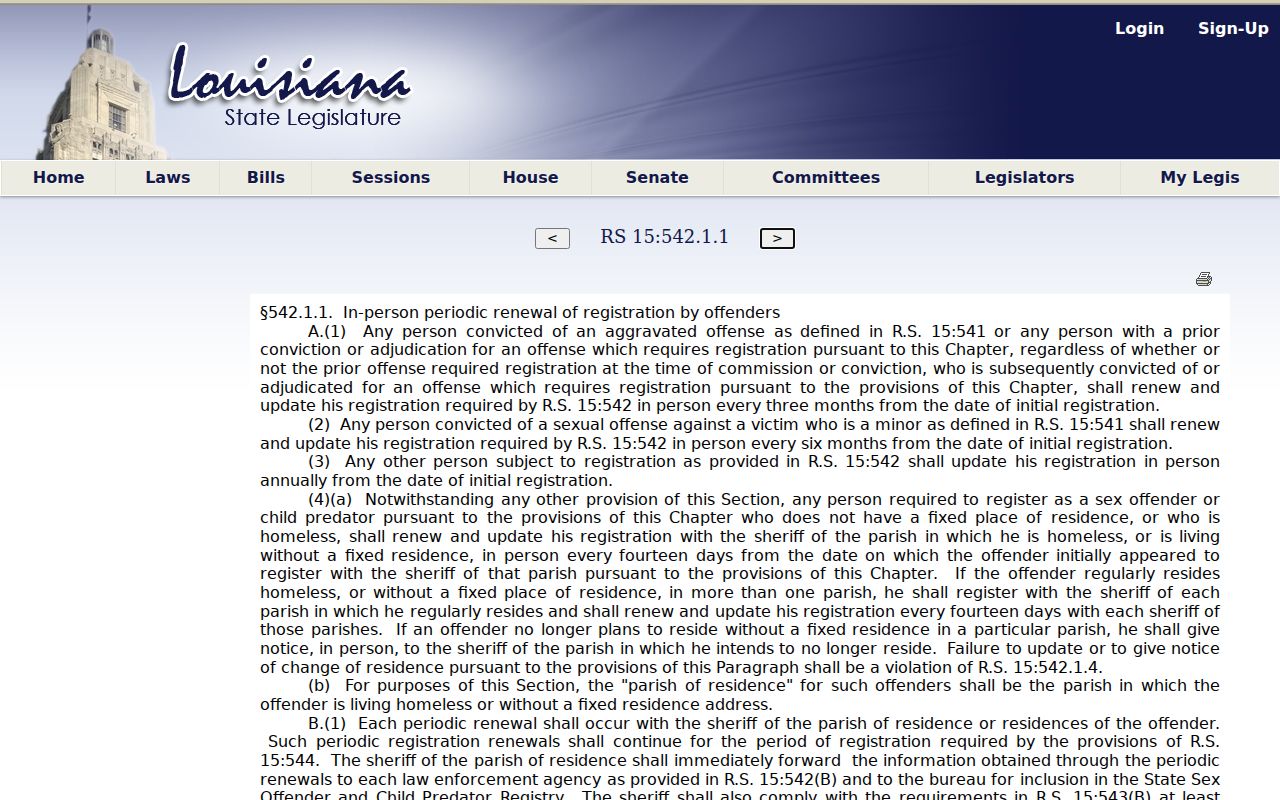
The statute image supports the renewal framework, but a person’s displayed tier must still be read together with the actual offense-specific profile and current legal requirements.
Registering and Verifying Through the Sheriff
BCII maintains the central system, and the Richland Parish Sheriff performs the local registration role. The sheriff’s administrative office is at 708 Julia Street, Suite 113, Rayville, with telephone 318-728-2071. Published office hours are Monday through Thursday 7:30 a.m.–5:00 p.m. and Friday 7:30–11:30 a.m. A person with a legal registration duty should confirm the required appointment, documents, timing, and correct reporting location directly rather than relying only on public map controls.
DPS&C reports that its Probation and Parole division supervises about 2,200 people convicted of sex offenses in Louisiana communities, but expressly notes that this is only a fraction of everyone required to register. Supervision status and registry duty are overlapping but different concepts; absence from a public probation database says nothing conclusive about registration.
Central Registry Duties and Local Publication
The Louisiana law describing central registry duties explains the state-level responsibility behind the public system.
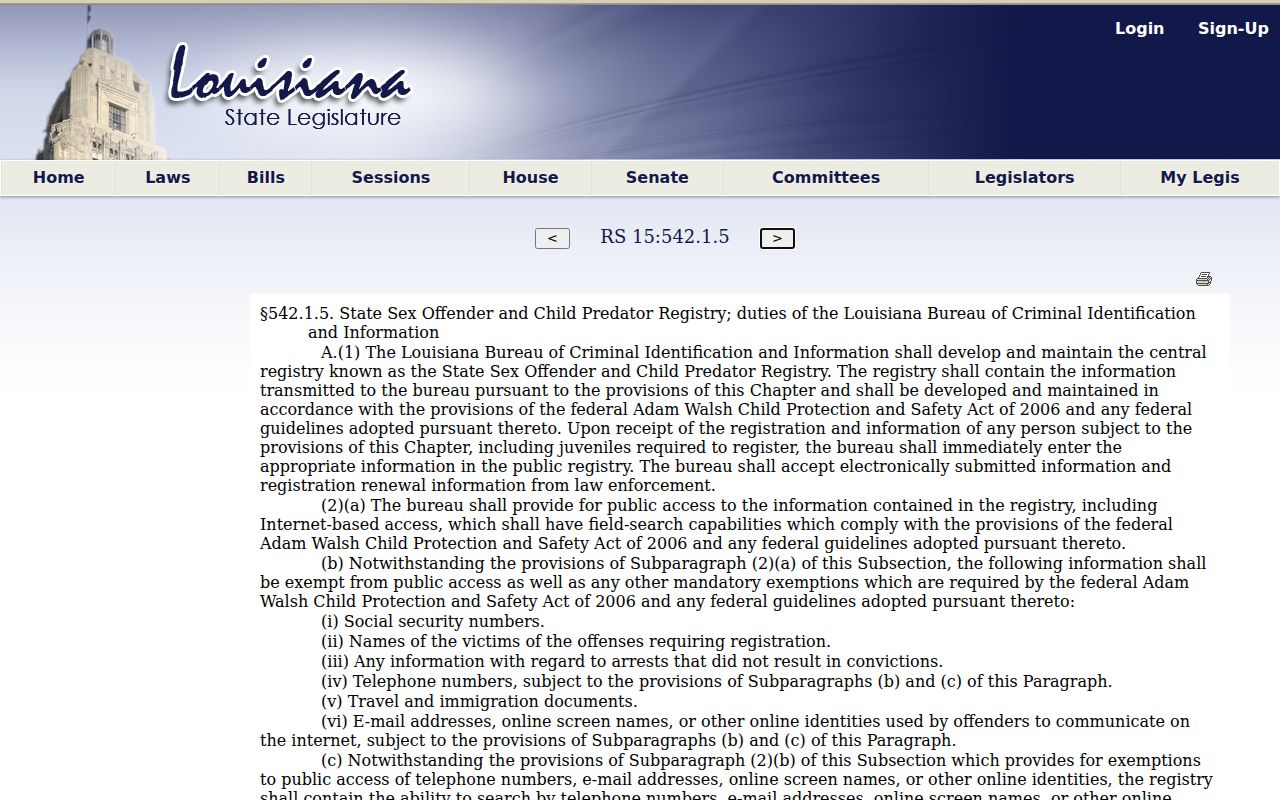
The statutory source shows why the local map and state registry should be understood as connected layers: the sheriff verifies and supplies local information while BCII maintains the central registry structure.
If an address appears outdated, do not confront the listed person or neighbors. Record the profile URL, visible status, and date checked, then contact the sheriff or use the registry’s official reporting route. Location data can lag a move, reflect a correction in progress, or require agency investigation.
Using Registry Information Lawfully
Registry information is published for public safety and community notification. It may be used to understand who is registered near a home, school route, family gathering place, or other location, and to make careful personal safety plans based on official facts. It should not be used to threaten, harass, intimidate, vandalize, discriminate unlawfully, or organize vigilantism.
Community notification does not replace emergency response, a police report, or verification by the registering agency. A public profile may be incomplete or in transition. Match cautiously, note when the record was checked, and direct questions about status or compliance to the Richland Parish Sheriff or Louisiana registry officials.